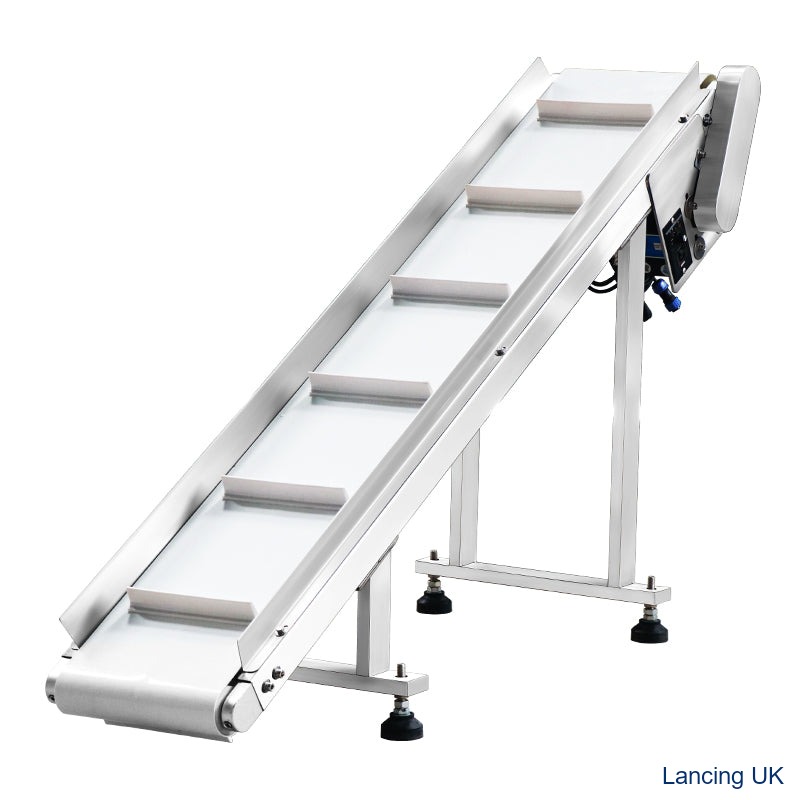
Mechanical interface
Provide a dimensioned plan, common datum, smallest base, guide contact zone and available length for transitions.

Packaging-line handling
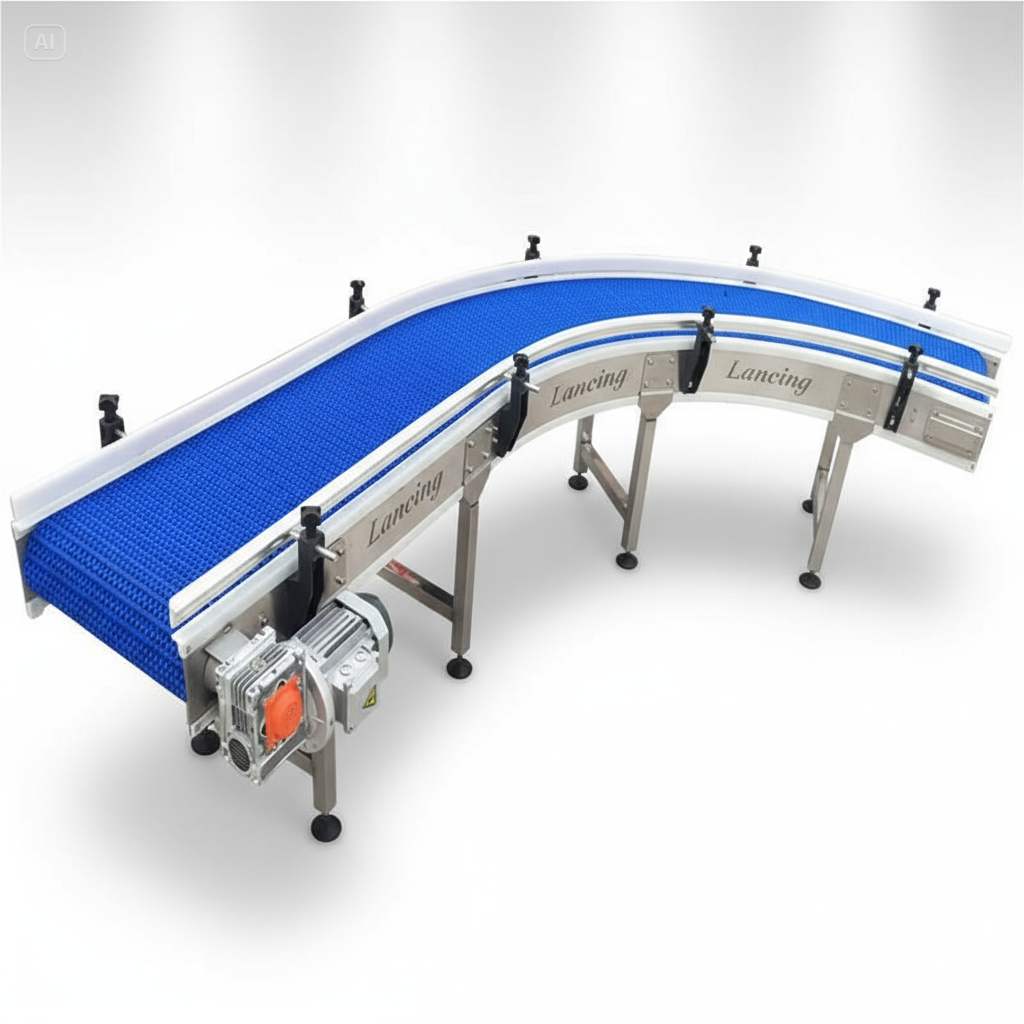
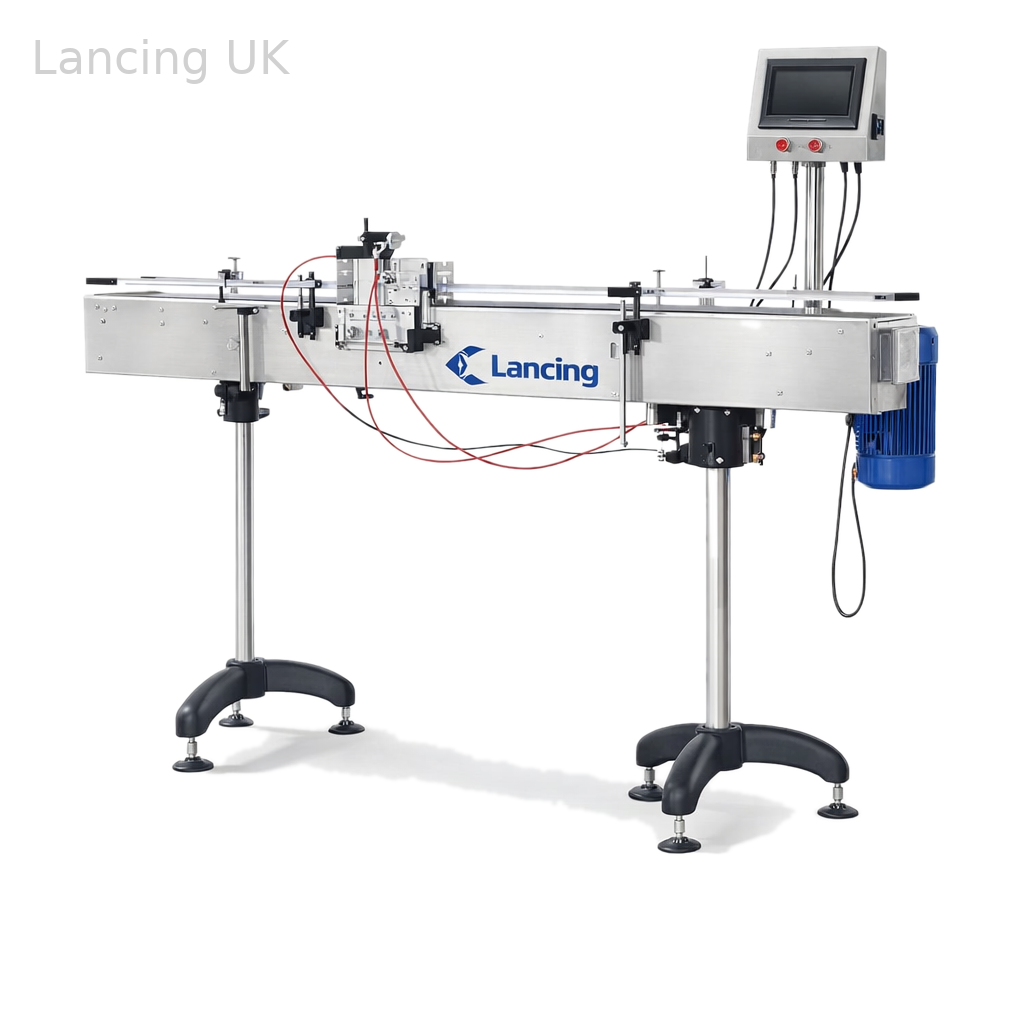
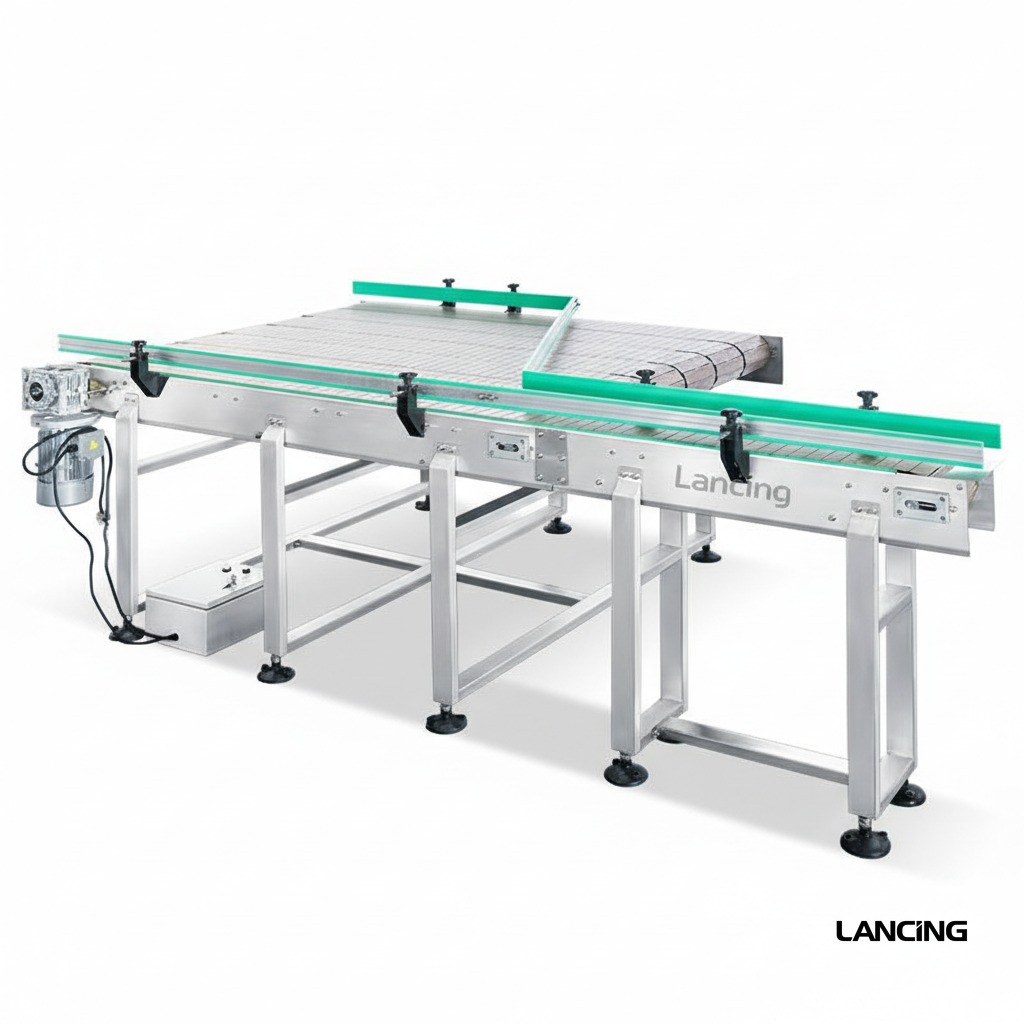
Conveyor width and length are only the start. Product base, guide contact, speed transitions, queue pressure, cleaning and controls determine whether the connected line runs reliably.
Use the conveyor and accumulation guide to document product weight, base, centre of gravity, fresh labels or seals, direction, height and normal/recovery speed. Mark every transfer and whether products may touch while queuing.
Provide a dimensioned plan, common datum, smallest base, guide contact zone and available length for transitions.
Define blocked, starved, ready, fault and emergency-stop boundaries plus full/empty buffer response.
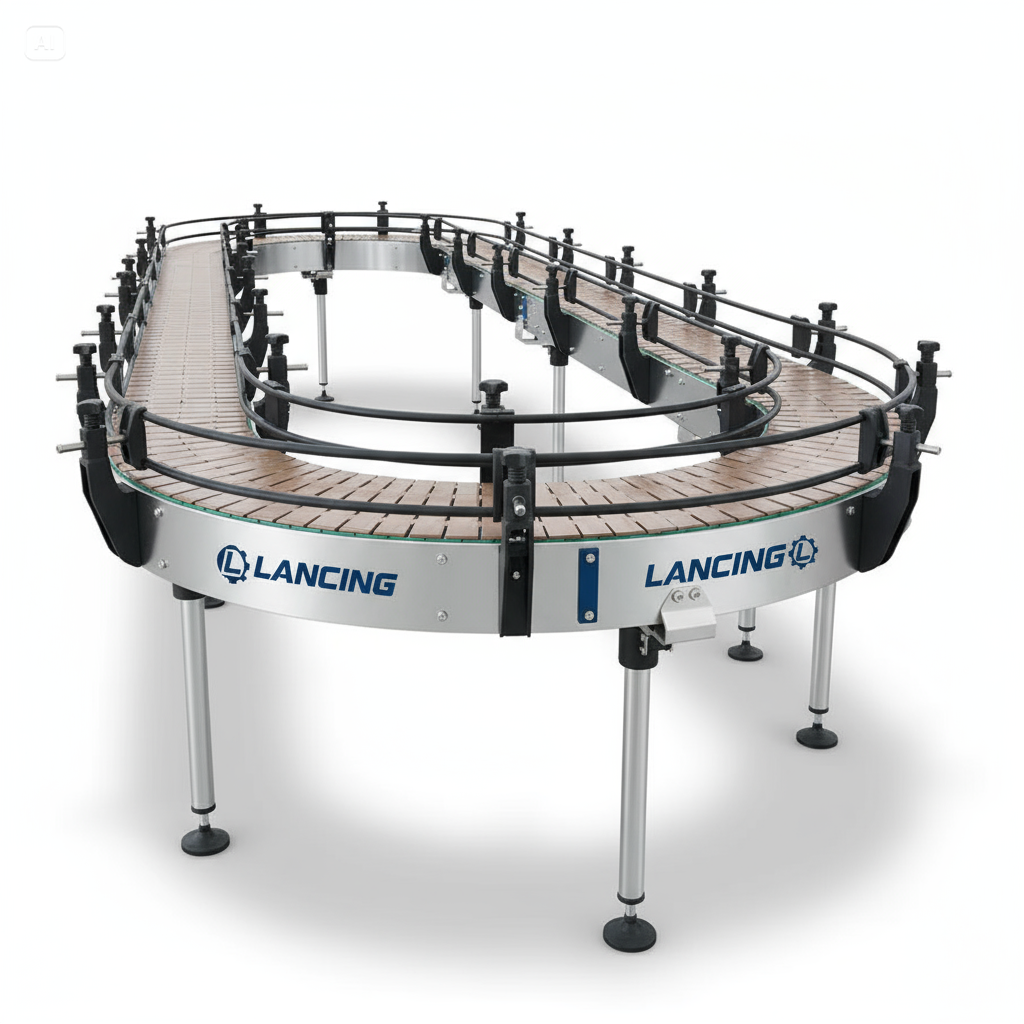
Choose belt, slat, roller, incline, curve and accumulation arrangements.
Coordinate transfer, timing, signals and fault recovery.
Confirm floor, route, footprint, utility and access constraints.
Ready to discuss the application?
Send the application details to Lancing for a tailored machinery review.
Conveyor and pack behaviour
A conveyor requirement should define more than length and speed. Pack footprint, centre of gravity, surface, orientation, accumulation pressure, guide contact, transfer gaps and the behaviour after downstream blocking all affect a reliable packaging line.
Prepare dimensions, stability, orientation and process-state information.
Plan transfers, buffers, lanes and flow-control decisions.
Define blocked, starved, stop and restart behaviour.
Include filled and empty pack conditions where both occur. Test normal flow, queue build-up, restart, lane changes and every transfer that crosses an equipment boundary.
Conveyor and buffer purpose
Only when the required handling or buffer objective is defined. More length does not correct a permanent machine shortfall, unstable pack, poor restart logic or a recurring quality fault. Measure the loss and pack behaviour before selecting the conveyor response.
Identify blocked, starved and structural losses.
Define pack stability, density, transfer and controls.
Record pack dimensions, stability and process state.
© Copyright 2025 by Lancing Ltd - all right reserved terms & conditions