VFFS and sealing guide
Define the film, bag and seal route.

Form-fill-seal guidance
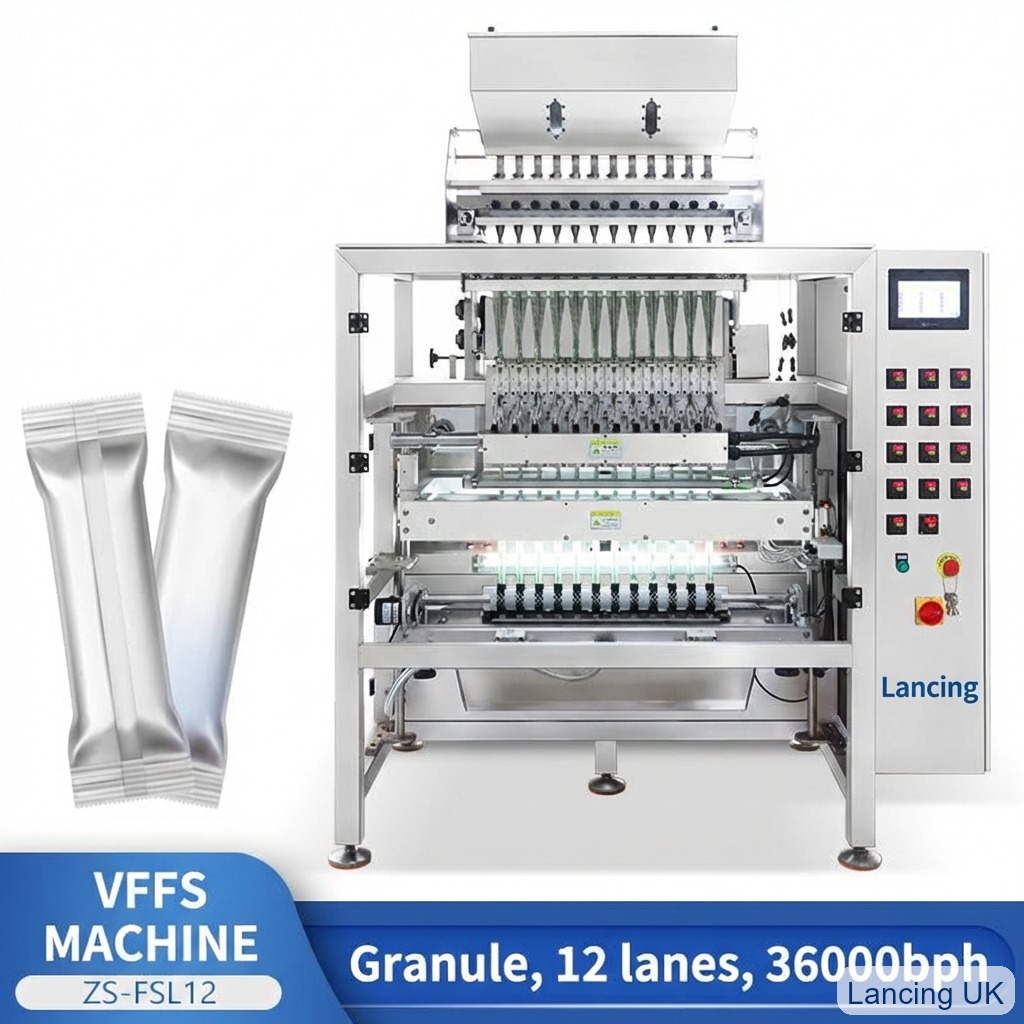
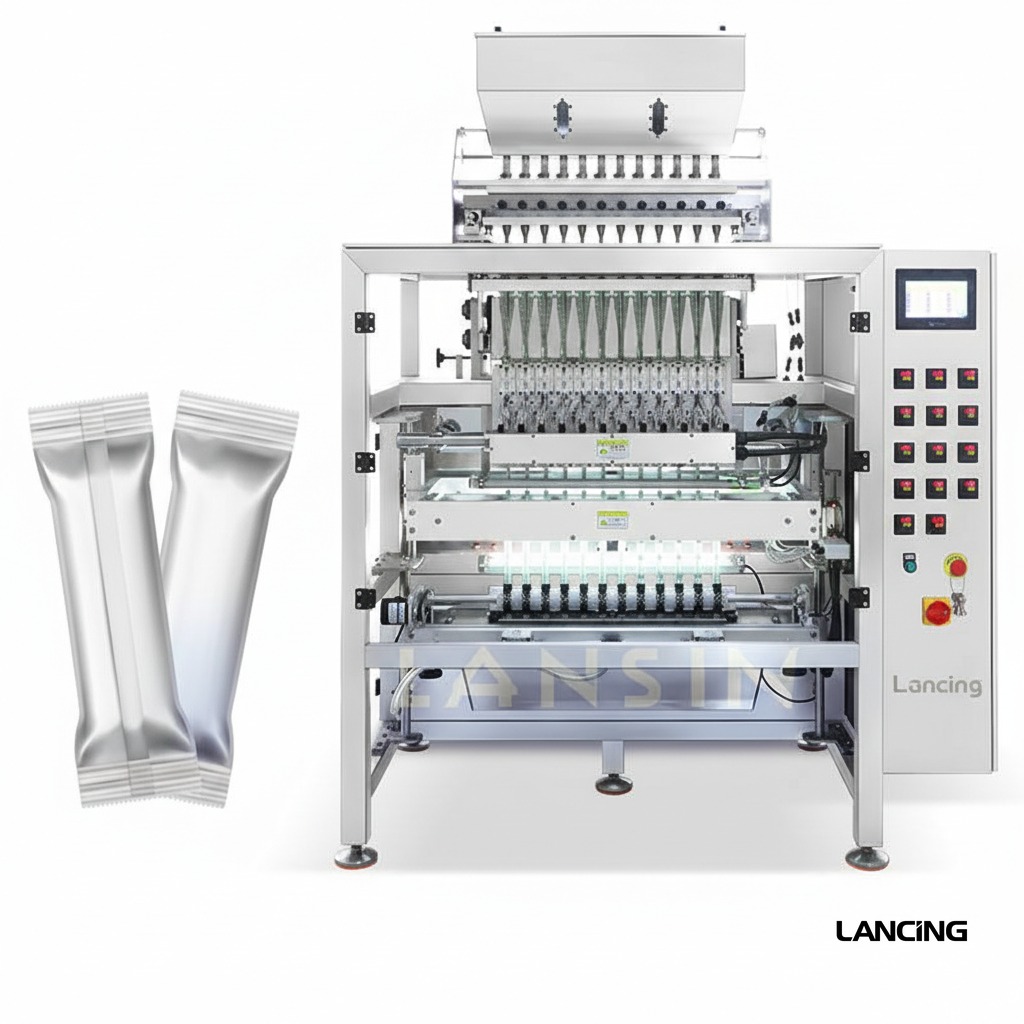
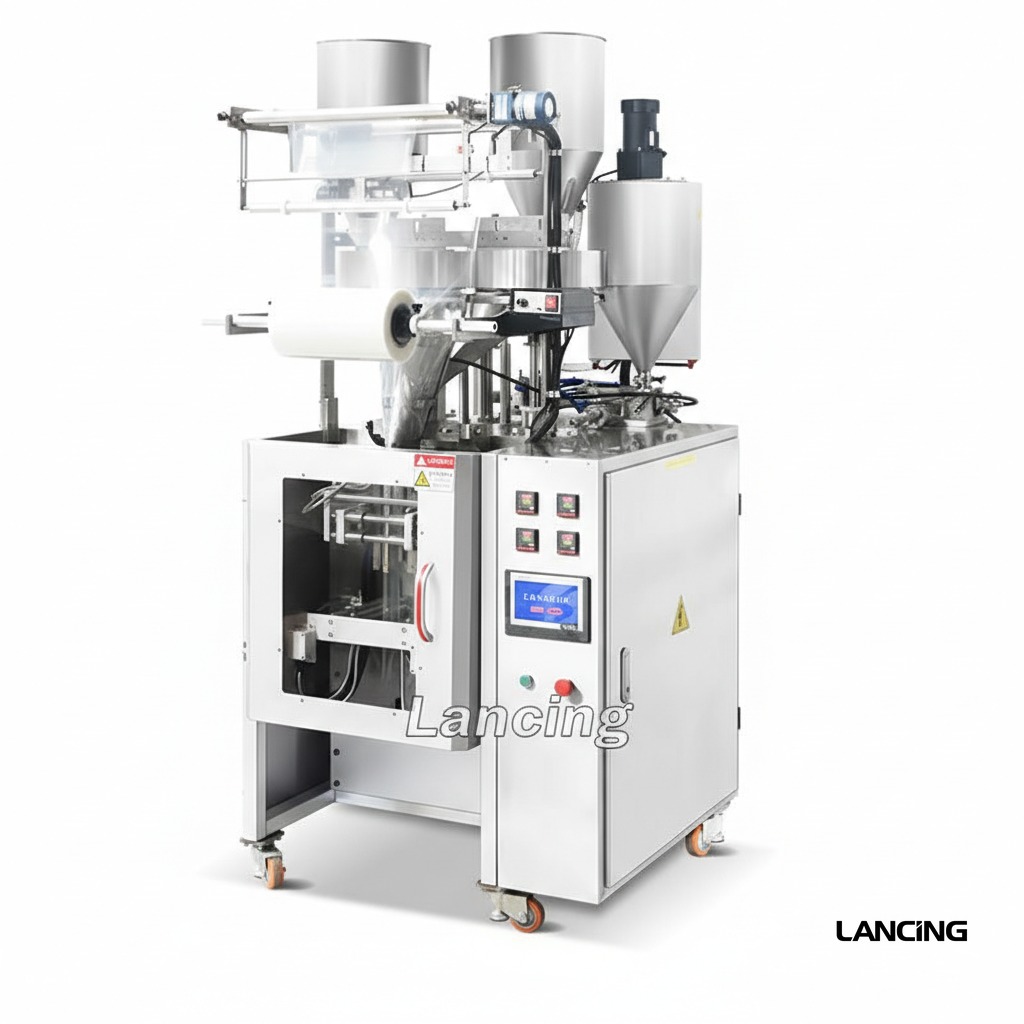
Vertical form fill and seal equipment forms a bag from roll stock, doses the product and seals the pack in one sequence. The dosing system and film must be selected together.
Auger dosing is commonly considered where controlled screw movement can meter a powder. Flow, aeration, dust and bulk density must be tested.
Weighing or counting methods may suit free-flowing products where individual pieces or mass must be controlled without excessive damage.
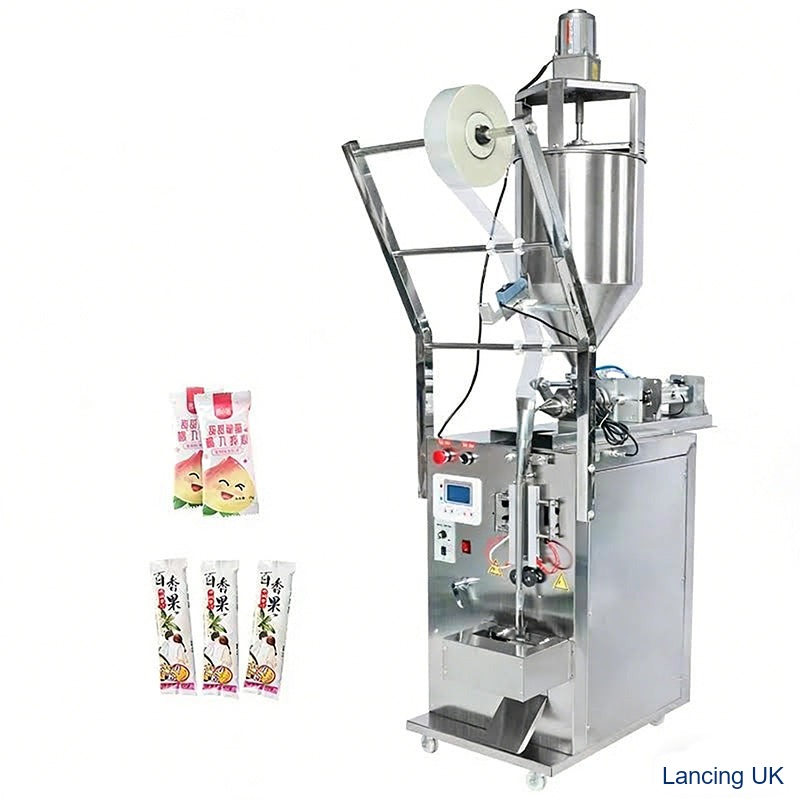
Pump selection, cut-off, splash control and product temperature become central. Review the automatic liquid sachet VFFS machine for a current example.
Bag width is set by the forming set and film width; bag length is controlled by the pull and sealing sequence. The product must clear the sealing area before the jaws close. Dust, strings of liquid or product trapped in the seal can reduce pack integrity.
Provide the film laminate, seal initiation range, roll dimensions, printed repeat and desired bag style. Include the actual dose range and product behaviour, not only the nominal product name. Coding, tear notches, conveyors and check equipment should be specified as part of the complete pack route.
Match the dosing principle to the product before choosing the bag maker.
Discuss a VFFS projectVertical form fill and seal describes a machine that forms a bag from roll stock, fills it from above and creates the seals before cutting or discharging the pack.
The bag maker may be similar, but liquids and powders need different dosing and product-control systems. Cross-use should only be considered after reviewing cleaning, seal contamination and changeover.
The forming, tracking and sealing system must suit the laminate thickness, friction and heat-seal window. Printed film also needs a compatible repeat and registration mark.
Bag length can often be adjusted through the controls, while a significant width change normally requires a different forming set and compatible film width.
Film condition, jaw temperature, pressure and dwell, product contamination, wrinkles and line speed all affect the finished seal.
Vertical form-fill-seal resources
VFFS is a connected conversion process. Product feed, dose timing, film tracking, registration, sealing and cutting should be trialled as one system.
Define product behaviour, target range, bag dimensions, film structure, reel details, seal layout and approved finished pack. Include product-free seal requirements and any zipper, hole, notch, gas or code feature. The trial should observe setup, stable running, stops, restart and material change.
Use the filling and wrapping guides to separate dosing questions from film-conversion questions, then combine them in the FAT plan. Do not infer performance for another product or film solely from one successful format.
Define the film, bag and seal route.
Match liquid, paste, powder or granule feed to the product.
Test production materials, faults, changes and measurable pack criteria.
Ready to discuss the application?
Send the application details to Lancing for a tailored machinery review.
VFFS selection questions
A VFFS project combines product dosing, film forming, sealing and pack discharge. These questions focus on the interfaces between those functions, where apparently small product or film changes can alter the result.
The forming set is matched to the film width, desired bag geometry and the way the film must travel around the product-drop path. It must also provide suitable clearance for the dose without allowing product to interfere with the longitudinal or cross seals.
Define the finished bag width and length, seal style, film structure, registration marks and the widest product particle or difficult dose condition. A forming set should be confirmed with production film rather than selected only from a nominal bag width.
The VFFS versus pre-made pouch guide explains the process boundary.
VFFS makes each bag from rollstock film on the machine; a pre-made pouch system opens, fills and closes a pouch supplied in its finished shape. The decision affects film or pouch procurement, pack presentation, changeover, opening reliability and the filling interface.
Neither is automatically more flexible. A pre-made pouch may offer features that are difficult to form inline, while VFFS can integrate bag making and filling from rollstock. Compare the actual pack portfolio and the evidence available for opening, dosing and sealing.
Read the detailed VFFS or pre-made pouch comparison.
Product in the seal area separates the film layers or changes how heat and pressure reach them. The resulting seal may look acceptable in one place but have a channel, inclusion or weak section that fails later.
Control the dose trajectory, settling time, cut-off, dust extraction or product tail before treating temperature as the only variable. Check seal cleanliness and integrity using the site’s defined method and the intended film and product condition.
Use the seal troubleshooting sequence.
Choose the dosing system from product behaviour and the acceptance method: liquid or paste pumps, augers, vibratory weighers, combination weighers or cup systems may all be relevant in different duties. The doser must also deliver within the bag maker’s timing and product-drop constraints.
Review flow, dust, fragility, particulates, density variation, target dose range, cleaning and the path from doser to bag. The interface should prevent bridging, uncontrolled dribble and product reaching the sealing area.
Compare dry-product methods in the powder dosing guide.
Provide product, production film or pouches, finished-pack dimensions, dose range and the required loading and discharge arrangement for a VFFS review.
Discuss the applicationVFFS film and product preparation
Vertical form-fill-seal performance depends on the product feed, film construction, web dimensions, registration, bag geometry and the ability to keep the seal area acceptably clear. A production-equivalent roll and product trial are required before final suitability is confirmed.
Define web, sealant, print repeat, friction and trial material.
Compare forming from rollstock with handling a converted pouch.
Separate material, contamination, heat, pressure and dwell effects.
State the product at its difficult condition, intended fill range, bag dimensions, web and roll limits, print registration, normal batch pattern and accepted seal test. Include start-up, splice, stop and restart conditions in the trial.
© Copyright 2025 by Lancing Ltd - all right reserved terms & conditions