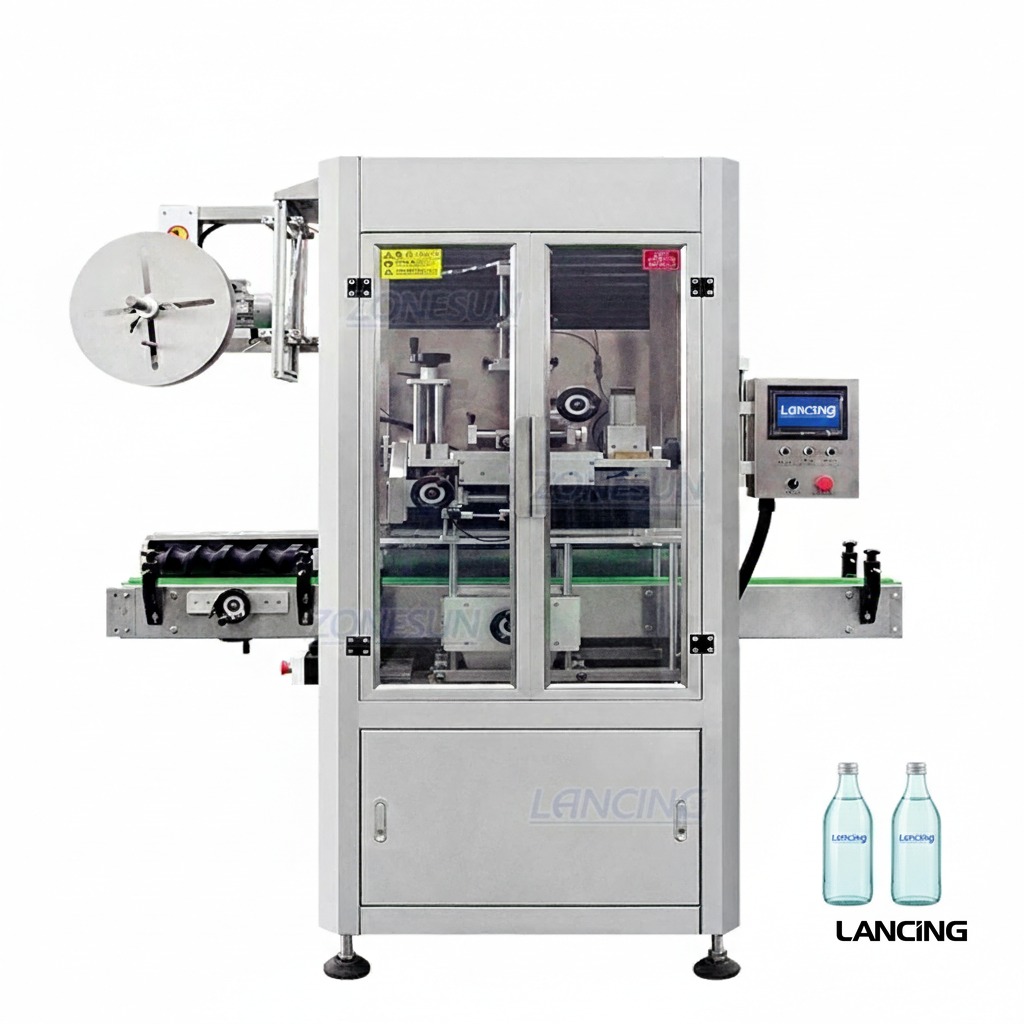
Shrink-sleeve application questions
Direct answer: Provide the container dimensions and tolerances, sleeve layflat and cut length, material and shrink behaviour from the supplier, print repeat and registration mark, seam and artwork orientation, application position, container temperature and the downstream shrink process. Sleeve application and shrinking should be trialled together because the finished position depends on both stages.
Define the detectable mark, print repeat, cut relationship and accepted artwork position on the final container. Include production print variation, not only a clear hand-marked test film.
Taper, shoulders, handles, ribs and changes in section can influence where the loose sleeve rests and how it moves during shrinking. The line should control orientation and position before the tunnel or other shrink process.
Use full production-equivalent rolls, containers across known tolerances and the intended shrink conditions. Record application, cut, static, tracking, final artwork position, distortion and behaviour after stops and restarts.
Sleeve application planning
A sleeve can provide a different decoration and tamper-evidence route, but it introduces sleeve handling, controlled shrinking, heat compatibility and artwork-distortion work. Compare the complete line scope before choosing the label process.
Compare process, pack shape, heat and material requirements.
Review the automatic product page and enquiry information.
Review alternative label application categories.
© Copyright 2025 by Lancing Ltd - all right reserved terms & conditions