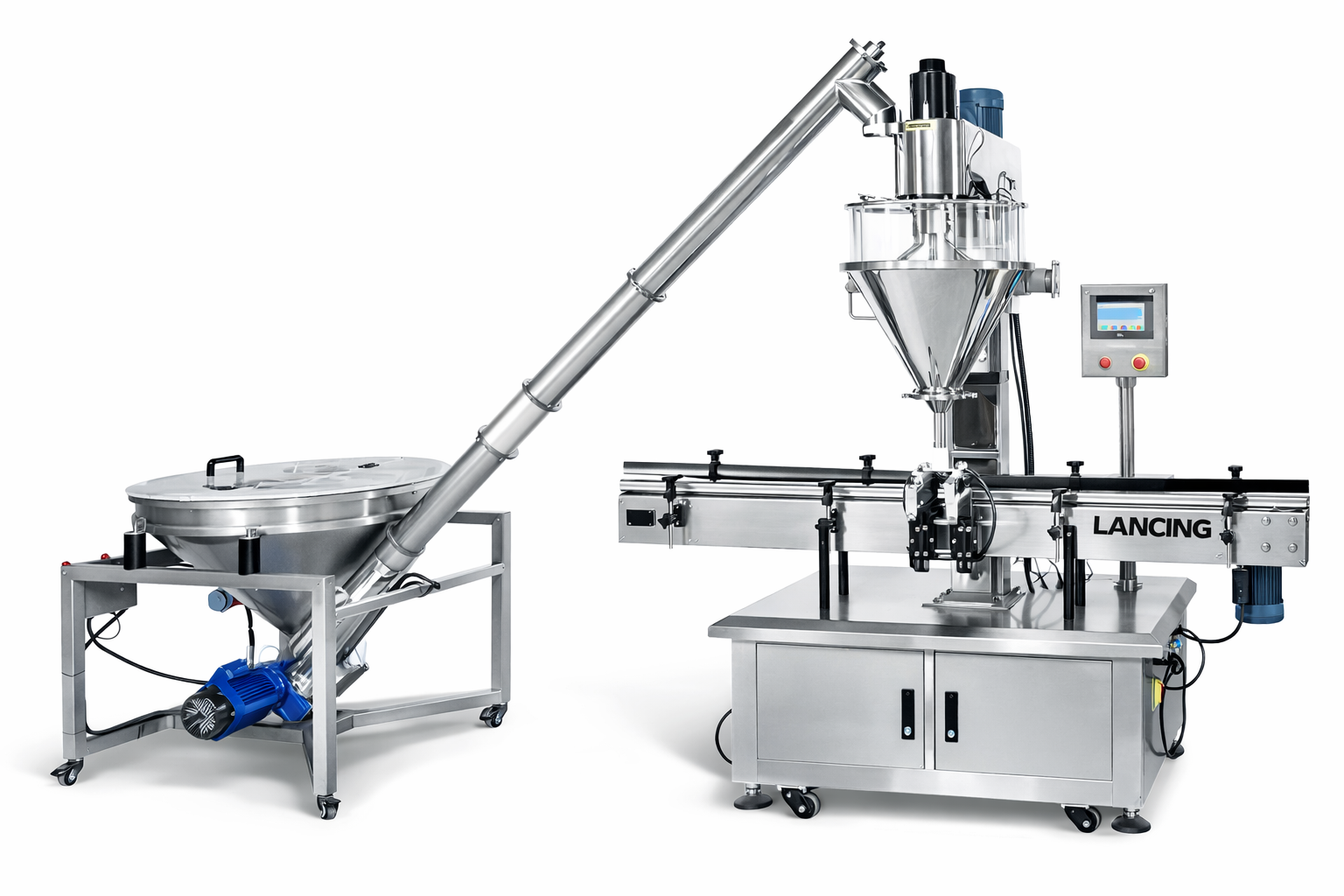
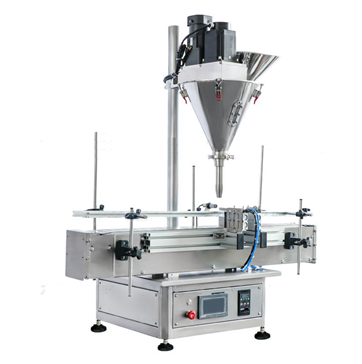
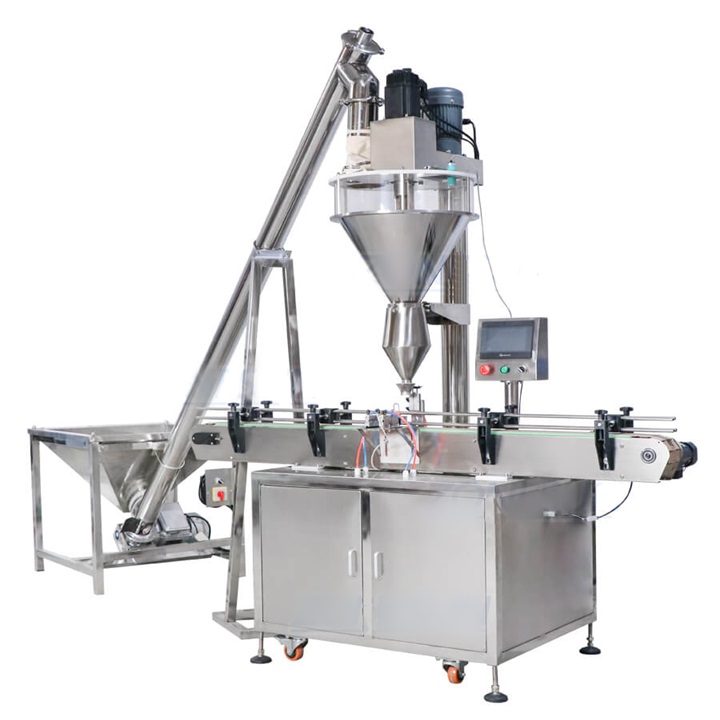
PTP series automatic screw blanking powder filling machines use a PLC and auger filling mechanism.
Auger Fillers are filling mechanism which measure out a product, usually powder or free flowing solids, using an auger which is rotated for a predetermined number of revolutions in a conical hopper to discharge the required volume of product.
The main benefit of these machines is their ability to control dust during the filling.
These machines can be used with our Gravimetric weighing systems – ask for details.
Voltage: 220V 50Hz
Machine power: 0.5KW
Hopper size: 6L
Hopper diameter: 320mm
Filling range: 20-500g
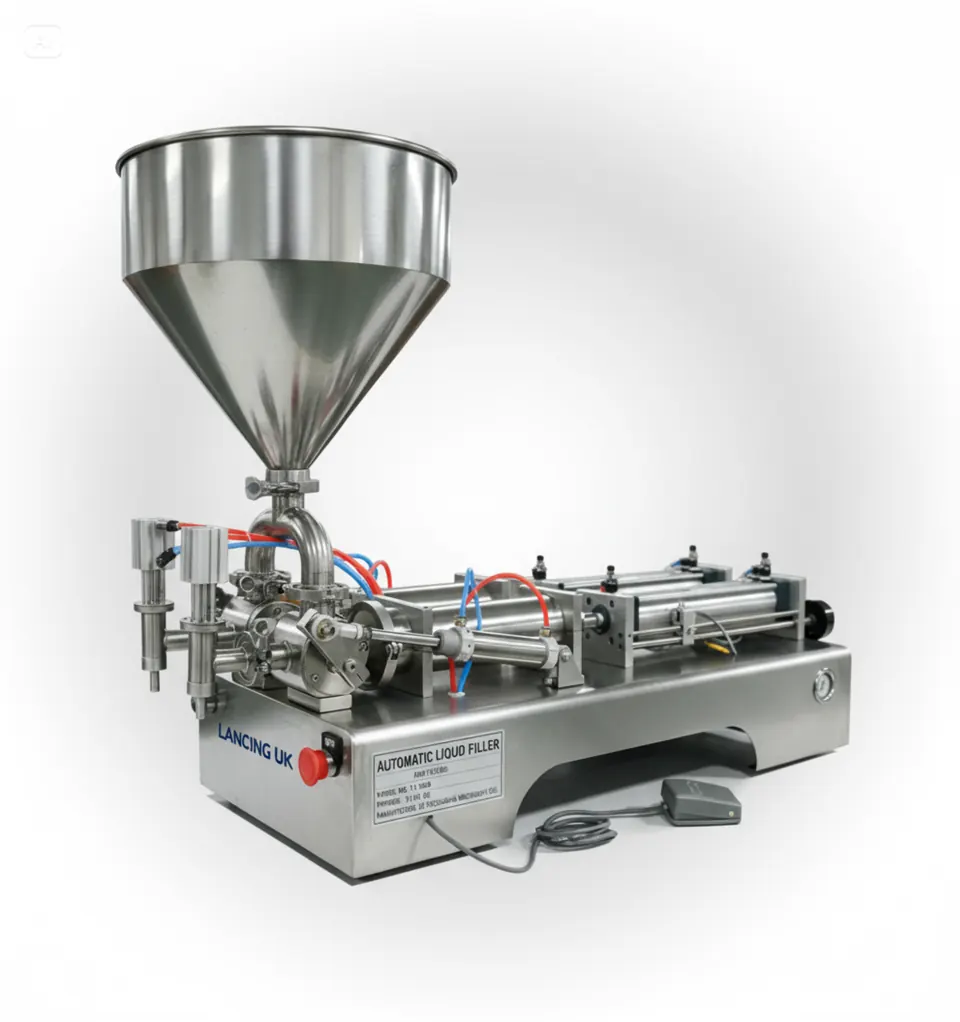
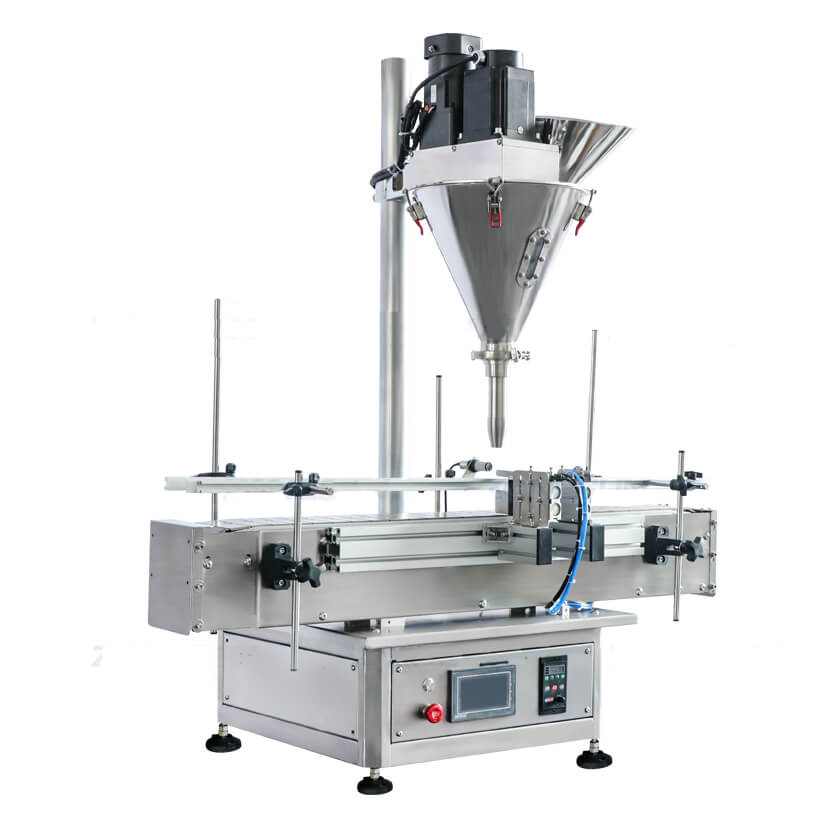
This versatile, automatic powder packing machine incorporates a conveyor complete with product gating and electronic control system.
Equipped with touch screen control panel to adjust working parameters like filling time and speed.
The high quality electronic sensor is used to detect passing by bottles and control the machine to fill powder.
This can ensure the filling accuracy and reduce production error.
The filling nozzle can be customized according to bottle opening size.
Voltage: 220V 50Hz
Machine power: 0.5KW
Hopper size: 6L
Hopper diameter: 320mm
Filling range: 20-500g
Filling nozzle size: 20mm (Can be Customized)
Filling accuracy: ±1%
Filling speed: 10 bottles/min
Auger dosing guidance
An auger filler measures product by rotating a screw through a controlled number of revolutions. The principle is straightforward, but the result depends on how consistently the powder enters the screw, how density changes in the hopper and how the dose leaves the tooling and enters the pack.
A compact powder filler or semi-automatic auger filler can suit operator-presented containers and shorter runs. An automatic auger filler adds conveyor handling, container detection and coordinated cycles. The correct choice depends on labour, batch length, pack stability and the equipment before and after filling.
One screw and tube combination may not be ideal across a very wide range. Supply the smallest, normal and largest target fills together with bulk-density information and samples. Lancing can then assess whether tooling or recipe changes are needed rather than assuming a single setup will cover every product.
Cohesive powders can bridge, smear or form voids; aerated powders can settle and change density during a run. Hopper agitation and refill method are therefore part of the dosing process. A trial should include normal product transfer and repeated hopper replenishment so that the first and later fills can be compared under realistic conditions.
Dust control, product contact and clean-down also affect the machine layout. Identify whether parts must be removed between batches, how residual powder will be recovered and whether extraction or enclosed transfer is required. The goal is a configuration that operators can set, clean and restart consistently.
| Observed behaviour | Possible project effect | Evidence to provide |
|---|---|---|
| Bridging or poor flow | Hopper geometry, agitation and refill method may need adjustment. | Video of current handling and a representative sample. |
| Density changes after settling | Volumetric dose can change unless product presentation is controlled. | Loose and settled density where available, plus repeated trial fills. |
| Dust at the discharge | Chute, extraction, guarding and pack position need review. | Actual pack opening and normal production environment. |
| Wide fill range | More than one screw/tooling set or a different dosing route may be practical. | Minimum, normal and maximum fills for every product. |
| Fragile granules or inclusions | Auger action may damage or segregate the product. | Particle size range and acceptable damage level. |
Rigid containers need stable positioning under the outlet. Bags and pouches may need opening and support so product does not enter the seal area. If the pack is formed from film, compare the automatic VFFS route; if it is presented pre-made, define how it is held and moved to a pouch sealing machine.
For a quotation, send product samples, fill targets, pack samples, output, batch length, available headroom and utilities. Include any checkweigher, conveyor, coder or dust-extraction interface. Where the product is free-flowing or irregular, a weigh filling system may also be worth comparing.
Need to compare auger tooling or automation levels? Send the complete product and pack range rather than a single nominal fill.
Request auger filler adviceAuger filling is commonly considered for powders and fine dry products that can be presented consistently to a screw. Flowability, cohesion, density, particle size and damage sensitivity should be checked with a sample.
An auger meters a volume created by screw movement. If the product becomes more aerated or more settled, the mass contained in that volume can change, so hopper refill and agitation need to be assessed.
Not always. A very wide fill range may need different screw and tube combinations or another dosing method. The complete minimum-to-maximum range should be supplied before tooling is selected.
Run representative product through repeated fills, including normal hopper replenishment, stops and restarts. Check weight or volume, dust, pack contamination, clean-down and the behaviour of the product as the hopper level changes.
Weigh filling may be worth comparing for free-flowing granules, irregular pieces or applications where mass is the main control target. The product sample and required output determine whether that route is practical.
© Copyright 2025 by Lancing Ltd - all right reserved terms & conditions