Capping machine selection
Match closure type, presentation and application method to the required result.

Pneumatic inline screw capping for spray and pump bottles. LUXG16 handles caps 18–70 mm and bottles 20–160 mm at 20–60 bottles/min with stable, adjustable torque.
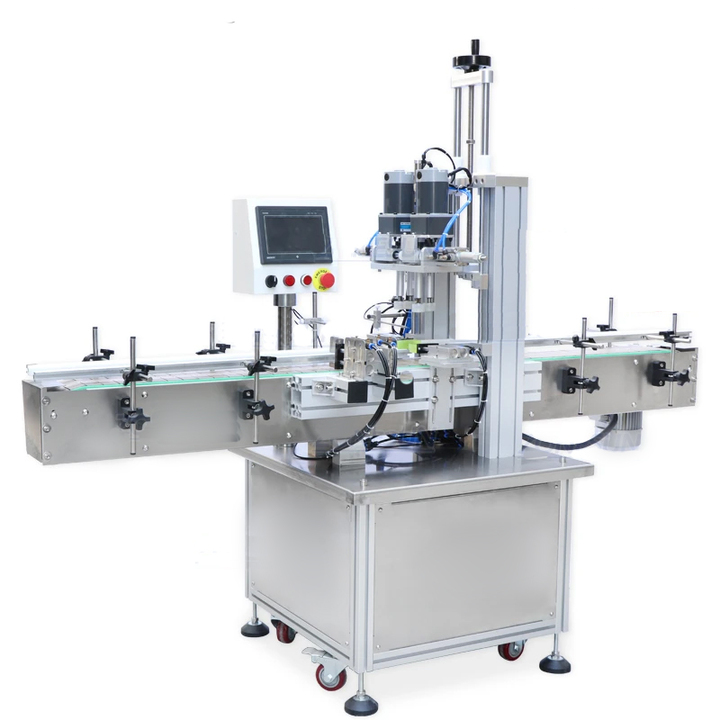
Consistent torque on sprays, pumps and screw caps.
Guides and clamps adapt to different bottles.
Automates start/stop and improves consistency.
Fits easily into existing lines.
Quick parameter setup.
Integrates with bowl or elevator when required.
Beer, cider, spirits, wine, soft drinks.
Sprays, lotions, shampoos, serums.
Cleaners, oils and speciality products.
Tell us about your products and line requirements. We’ll confirm compatibility and quote the best configuration.
Application and selection guidance
The LUXG16 is presented for spray, pump and screw closures. Closure geometry, thread engagement, torque and container support must be confirmed using matched production samples.
The capper uses an inline application system with adjustable fixtures and photoelectric control. The page lists cap diameters from 18–70 mm and bottle diameters from 20–160 mm as reference ranges.
Closure height, skirt shape, pump head and dip tube can be as important as diameter, so every closure must be physically tested.
Consistent torque requires stable bottle handling and repeatable cap engagement. Lightweight or flexible bottles may need additional support through the capping zone.
The acceptance method should distinguish application torque from functional outcomes such as leakage, thread damage and consumer opening.
The page notes optional bowl or elevator feeding. Automatic feeding is a separate engineering task: caps must be orientated, transferred and presented without jams. Pumps and sprays with long dip tubes can need particular tracks or placement methods.
Provide the upstream filler discharge, conveyor height, bottle pitch and downstream labelling requirement. The reference speed of 20–60 bottles per minute depends on cap placement, thread, container stability and the feeding system.
List all bottle and cap combinations so guide adjustment, capping-head settings and change parts can be defined. Wear components that contact the closure should be inspected as part of routine maintenance because surface condition influences grip and finish.
Use matched production bottles and closures to confirm placement and torque.
Request a screw-capping reviewThe page identifies sprays and pumps as applications, but each closure must be tested because head shape, dip tube and thread engagement affect placement and feeding.
No. Diameter is only one variable. Closure height, skirt, thread, bottle support and cap presentation must also suit the machine.
Machine settings are adjusted against the matched bottle and cap, then checked using the agreed torque or functional acceptance method.
The page describes bowl or elevator feeding as optional. The selected feeder must be matched to the closure and required rate.
Insufficient support, low container stiffness, unsuitable belt pressure or excessive application torque can allow rotation. The handling arrangement should be tested with filled containers.
Automatic screw-capping resources
Automatic capping depends on closure presentation, accurate placement, container support and a repeatable application method. The bottle and cap should be tested together under the expected line conditions.
Supply production bottles, closures, pumps or sprays from normal and extreme manufacturing batches. Record neck finish, cap dimensions, tamper features, liners, dip tubes and any orientation requirement. Define the functional acceptance—such as secure application, seal integrity, orientation or an agreed torque test—using a documented method rather than a single unqualified number.
Review cap feeding, accumulation, low-level response and the operator task for replenishment. The least stable container and longest dip tube often reveal handling constraints that a rigid sample does not. Include infeed pitch, conveyor height, guide contact, downstream labelling and the response to a missing, cross-threaded or incorrectly seated closure.
Match closure type, presentation and application method to the required result.
Provide representative components and measurable acceptance evidence.
Coordinate product spacing, stops, faults and downstream transfer.
Ready to discuss the application?
Send the application details to Lancing for a tailored machinery review.
Automatic screw-capping component detail
Use complete production caps and containers to confirm separation, orientation, pick-up, thread start, tightening and the accepted finished result. Include liners, tamper bands and known dimensional variation; nominal cap diameter alone is not enough to define tooling.
© Copyright 2025 by Lancing Ltd - all right reserved terms & conditions